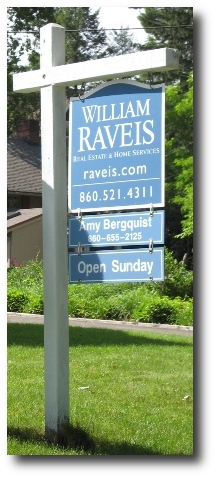
 You’re driving down the street and you pass a nice looking house with a For Sale posted in the yard. You’re not working with a real estate agent and you want some more information about the house, so you call the number on the For Sale sign. You’re either connected with the agent actually listing the house or the real estate office where they work.
At this point, the person on the other end of the phone is probably going to ask you if you’d like to see the house. You say “yes” and arrange a time to meet them at the home. What is supposed to happen next doesn’t always happen, even though according to Connecticut real estate law it should.
When you arrive at the house, the real estate agent meeting you should explain that they represent the seller. They need to put the seller’s interests first, as that’s who has contracted with them. You should be presented with an “Agency Disclosure Notice for Unrepresented Persons” form, which explains that you have the responsibility to protect your own interests. The agent showing you the house has undivided fiduciary obligations to the seller, not you.
Alternatively, the agent may present you with a Buyer’s Agency form, which means that they would represent you as a buyer’s agent for that house. This then initiates Dual Agency. I’ve previously written about the difficulties with dual agency.
Unfortunately, while it is required by Connecticut real estate law, agents don’t always tell buyer’s in this situation that they represent the seller or talk about dual agency. I had two cases this weekend where I was explaining agency to people that are considering working with me. They have seen houses in the past with listing agents, but never received any explanation that the listing agent represented the seller.
Even more disturbing was the case where a buyer went to see houses with an agent that contractually represented neither the buyer or the seller. For example, as a William Raveis agent, I can show any William Raveis listing to any buyer, as long as I explain to them that I represent the seller. However, I am legally not allowed to show a buyer another agency’s listings unless I have a signed Buyer’s Agency agreement with that buyer. I cannot show Prudential, Coldwell Banker, Century 21 or another agency’s listings if I don’t have a buyer’s agreement because I would represent neither the buyer nor the seller. But for some reason agents still do this.
Connecticut has real estate laws in place in order to protect the consumer. It’s unfortunate that some agents don’t always follow the rules. It’s not always comfortable meeting someone for the first time and telling them “I don’t work for you, I work for the seller,” but it’s the law. If you’re not sure who an agent is working for, don’t be afraid to ask. And don’t sign paperwork you’re not comfortable signing.