Archive for the 'Inspections' Category
Dealing with Home Inspections in a Buyer’s Market
You’re a seller and (finally!) someone wants to buy your house. You’ve got an accepted contract. Congratulations, you’re past the first hurdle in this slow market. Now it’s time to move on to, potentially, a more difficult phase- the home inspection.
When inventory is high and buyers have a lot to choose from, the ball is in the seller’s court to try and keep the deal together through inspection. Here are a few hints as a seller that will hopefully help ease the inspection process and move you on to the next step, mortgage commitment…
1. Have your own home inspection done before you list your house and have any major issues taken care of before it goes on the market. If the home inspector finds problems with the electrical, plumbing, heating, or any other major system, have a licensed professional come in and fix the issue. Keep receipts of the work performed and provide them to the buyer prior to their inspection.
2. Offer a 1 year homeowner’s warranty to the buyer. If any of your mechanical systems are near the end of their life, a homeowner’s warranty is a great way to give a buyer peace of mind for the first year of their homeownership. These typically cost around $400-$450 for the seller and will be rolled into your closing costs.
3. If the inspector finds mold, have it remediated if the buyer requests it. If you refuse to have the mold remediated and the buyer walks away from the deal, you then have to disclose that there was mold found. This becomes a “material fact” so your agent, and you, must disclose it going forward. Future buyers will most likely either be turned off by this fact and not put in an offer or request that you have it remediated as an outcome of their home inspection. It’s best to just have it taken care of once it’s identified as an issue.
4. Have your furnace serviced and chimneys swept. If you benefited from a year of use (or more) of your furnace and chimney, have the proper service professionals come in and maintain them.
5. Stating that you are selling your house in “as-is” condition may not be enough. The buyer may still request that items be fixed or they have the right to walk away from the deal. I recently had a buyer receive 3% off the agreed to purchase price of a house because major items were found during inspection and he threatened to walk away. Once those major items become known, they become “material facts” to the next buyer. You may need to be able to withstand a buyer walking away or bend to their requests and issue credits or have items fixed.
As the market shifts to favor buyers more than sellers, home inspection becomes another benefit to the buyer. Proactive sellers can improve their chances of keeping a deal together if they follow some or all of the steps above.
Tomorrow I’ll outline some home inspection strategies a buyer can take that will help them maximize the current market environment.
Water in the Basement- Now What?
This week I went to preview a house for some clients. They indicated interest, so rather than waste their time, I went to check it out to see if the floor plan would meet their needs.
The house is in a very desireable neighborhood in West Hartford. I walked around the first floor and the layout seemed to meet their needs. So far, so good. Then I checked out the upstairs. Good sized bedrooms and a master bath. Perfect, just what they’re looking for. I’m heading for the front door and then realize I should also look in the basement to see if the mechanicals have been recently updated. I turn on the light and a nice surprise, the basement looks finished. Ah, extra square footage, always a good thing. I walk down the steps and as I land on the carpet I hear “squish.” Huh, what was that? I take another step. “Squish.” “Squish, squish, squish.” The basement carpet is soaked.
Swell. Is a pipe broken? What is going on here? The listing office told me that the homeowner is gone for several days, so no one knows about the issue but me. Time to investigate to see if I can figure out what caused it and determine if it’s still actively flooding. Squish, squish, squish. Nope, the pipes seem fine. There are what appear to be older water stains on the carpet and the soaking area is below a basement window. Must be the gutters overflowed during the massive rainstorm we recently endured, directly into the basement window. I trek outside to see if my theory is right. Yep, there is gunk sticking out of the gutters and the mulch around the window well has been completely washed away. At this point I call the listing agent’s cell phone and leave a message for him explaining the issue, as I know the home is vacant for a few days. He never calls me back to acknowledge he received my message or ask me about the situation.
Before I left the house I picked up the Seller’s Disclosures that were provided. They indicate no issues with basement water seepage or dampness. But there was a dehumidifier in the basement, there were older water stains, and I just saw that it was flooded. My disclosure to the other agent has now made this a material fact, which means that, legally, he should disclose this going forward. Will this happen? Most likely not. Did I tell my buyers about this issue? You betcha. If they have any interest in the property I will urge them to get a mold test and ask for monetary concessions to deal with the problem.
This type of situation probably happens all of the time because disclosing an infrequent problem is unlikely to be seen and would only reduce the price a seller can get for the house. This type of deception is illegal, but likely happens on a regular basis because there is a stong financial incentive to do so. I was just fortunate enough to see the problem at its worst, so if my buyers are interested I can adequately protect them. This just illustrates the importance of getting a home inspection in order to further protect your future investment.
Knob and Tube Wiring
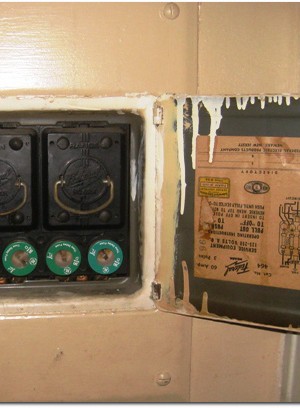
If you’re looking to purchase a home that was built between the late 1880s and early 1930s, your home inspector may discover knob and tube was used as the electrical wiring. While some argue that the knob and tube is actually superior to current electrical wiring practices, the age of the system typically leads to some type of degredation, therefore necessitating that it be at least partially replaced and upgraded.
It’s becoming more and more common now that buyers are unable to get a home insurance policy on a home with knob and tube. What insurance companies were willing to insure just 2-3 years ago has changed. If your home inspection turns up knob and tube, the homeowner will most likely need to upgrade the system in order to sell the home. You won’t be able to get an insurance policy to satisfy your mortgage commitment otherwise. I’ve seen this issue pop up twice in the past week. The seller now has to upgrade the system before the closing in each case. If you’re a seller, you might want to consider having the wiring fixed even before you list your house for sale. You’ll head off potential issues.
If you’re not familiar with knob and tube, here are two good links that give helpful explanations of how the wiring works and why it needs to be upgraded. Ask The Home Inspector and Wikipedia.