View from Riverfront Park
News and views about real estate in Greater Hartford

Archive for the 'Renting' Category

Hollander Foundation Center Progressing

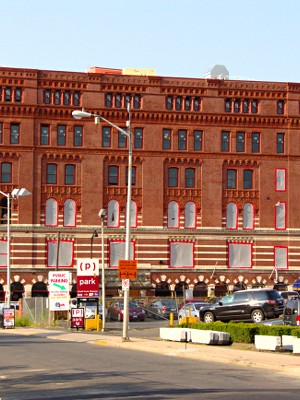
The next downtown residential project to begin renting is going to be the Hollander Foundation Center at 410 Asylum Street. The drywall is up inside and work crews are making steady progress towards their August 2009 completion goal. Common Ground, the project developer, is currently looking for retail tenants for six ground floor retail suites. Rental applications for the apartments will be available later in the spring.

Hollander Foundation Center

Plans for 410 Asylum have changed dramatically over the years. Vacant since 1995, previous owners considered a number of possibilities before beginning proposing demolition. In response, the Connecticut Historical Commission obtained an injunction against the demolition. They successfully defended the resulting lawsuit, brought by the owners, as the federal court upheld the property’s inclusion in the High Street Historic District on the National Registry of Historic Places. Eventually the structure was donated to Common Ground for redevelopment.

Even after Common Ground took over, there was still some debate within the City about its appropriate use. All parties agreed that ground floor retail with residential above was ideal, however the City and other local developers expressed concern about bringing “supportive housing” to such a prime location. The building is located on the north end of Bushnell Park with unobstructed views of the Connecticut State Capital Building, which could theoretically make it quite valuable.

But all that is in the past. Construction has been going on for over a year - check out the field report photos - and is nearing completion. Jennifer Hawkins, a very helpful representative of Common Ground, notes that “The building will be a mix of historic restoration with modern “green” features.” It will be LEEDs certified (the first in Hartford) and will be a smoke free building.

Hollander Foundation Center

When complete, there will be 70 apartment units. Of the total, 56 will be income restricted units in a mix of studios (~494 sqft), one bedrooms (~564 sqft) and two bedrooms (~926 sqft). They will only be available to applicants with income at 60% of area median income. Depending on the number of family members, this translates to tenants earning between $34,000 and $43,000. The rent for those units will be set at approximately 30% of income, and include all utilities, access to basement laundry facilities and outside parking.

The other 14 units will rent at market rate and are all two bedroom units (~969 sqft) with in-unit laundry and indoor parking (utilities not included). Rent has not yet been finalized, but initial indications are that it will be about $1,600 per month. The basic floor plan for the apartments can be seen on the 8th page of this marketing document. You can also see the plans for the six retail spaces on the ground floor. Note that some of the information in the PDF may have changed - the figures I have quoted in the text have all come from a recent series of exchanges with Ms. Hawkins.

Common Ground is planning to have a model apartment available for viewing in May, and to begin accepting rental applications in the June/July timeframe. For now, they are collecting names of interested perspective tenants. For more information, or to be added to the list, call 888-399-8848.

The completion of the Hollander Foundation Center will be an exciting event for Hartford. Not only will it formally announce the arrival of Common Ground, but it will also allow our downtown population to continue to grow. Perhaps most importantly, the project has rehabilitated a vacant historic building and integrated it back into the community. It represents one more step in our slow march to revitalize Hartford’s downtown.

Update: Rents for the affordable units are fixed monthly rates, rather than based on individual tenant income as originally stated.

Renting Your Home When You Can’t Sell

Right now, many sellers are finding that they’re not exactly getting what they thought they would when they try to sell their homes. In some cases, sellers are deciding to forego an immediate sale at a price they find less than palatable, and instead focus on renting their homes, as they try to wait out the market.

Renting isn’t always the optimal choice for a seller because it doesn’t free up liquidity if they need to immediately purchase another home. Additionally, sellers have to act as landlords and be responsible for a property, even though they may have moved across the country. A renter won’t necessarily maintain a home as well as the owner, so when it comes time to try and resell, the owner may have to make improvements and fix problems from the renter’s stay.

That being said, there are some advantages to renting a home in today’s market…

1. Right now there are many people who would like to buy a home, but can’t because of the current state of the mortgage market. Either their credit scores are too low or they need more time to save for a larger down payment. There is a large market of renters currently available, allowing sellers to sometimes command enough rent for their house to cover all of their carrying expenses.

2. If a seller does not need to liquidate their investment (house) immediately they can take their time and try to wait out the market. This can work especially well if all of their carrying expenses are covered by the renters. When the market starts to turn in seller’s favor, they can typically react by trying again.

I have noticed an uptick in sellers renting their properties this year and thought it would be interesting to see if there was data to support this observation. Here is the Multiple Listing Service data for Single Family home rentals in the Greater Hartford area…


Most towns in Greater Hartford have seen an increase in the number of single family home rentals in 2008 when compared to the same time period in 2007. Overall, single family home rentals in these towns have increased by 47% over 2007. It’s also important to keep in mind that these rentals only take into account the properties that are brokered by real estate companies. Many sellers are privately trying to rent their homes after they are unsuccessful at selling, so the increase may actually be even more significant.

It’s important to keep in mind that most sellers would prefer to sell their house outright, rather than rent. Typically when you see a house for rent, it will also be for sale at the same time. The seller would prefer a sale, but will take a good renter if they find one.

Additionally, if you’re looking for a house to rent, the column “Number of Active Rentals of Single Family Houses” should help you focus your search, as you can see which towns have the most options currently available.

Regionalism in CT

This Sunday’s Courant contained an excellent editorial about regionalism as a possible strategy for addressing the financial challenges our numerous local governments face. It is a very helpful piece because it not only introduces & defines the idea, but also looks at pros & cons. Finally, the article cites other US metropolitan regions that are already making strides with this strategy and articulates first steps for Greater Hartford.

CT State Capital

Town finances impact all of us (even renters) through property taxes. They are a hot button issue for the traditional pro-school and anti-tax groups that emerge every time a budget comes up for debate. There is always lots of rhetoric, and there is sometimes cooperation and compromise, but there are rarely constructive suggestions or discussions that address the underlying issues. Which is not surprising because the established rules of the game are that everything is local.

The Greater Hartford Real Estate Blog has written about the financial stresses that local governments face on a couple of occasions. One post focused on West Hartford’s ongoing budget situation, while the other was more general and looked at the difficult economics of running a town. We see financial trouble on the horizon at all levels of government. And like many others have not been sure how best to work within the rules.

Rather than continuing to beat each other up at a local level, another way to address the challenges is to team up at a state and/or regional level and try to work together. The Courant has stepped to the front by making an initial proposal that includes the following:

1. Launch a study at the state level to identify whether or not core services can be more efficiently delivered on a regional basis (with the focus on federal metropolitan areas rather than counties).

2. Begin dialogs about regionalism at the town level immediately, and launch a major education campaign if the state study shows meaningful savings are possible.

3. Create incentives at the state level to encourage towns to participate.

4. Consider enhancing the existing entities that already think on a regional level so they can play more of a leadership role.

Regionalism is a new arrow in our quiver as we all go through the local budget balancing process. It joins tax hikes, reduced services, begging for more state money, and increased efficiency as the primary tools for making sure that town revenue matches town expenses. And of the five, it seems most likely to make a meaningful long-term impact.

So give the editorial a quick read. Talk about it with your friends, neighbors and coworkers. And if it seems as promising to you as it does to us, tell your elected officials to reach out to their counterparts in other towns.

« Previous Entries