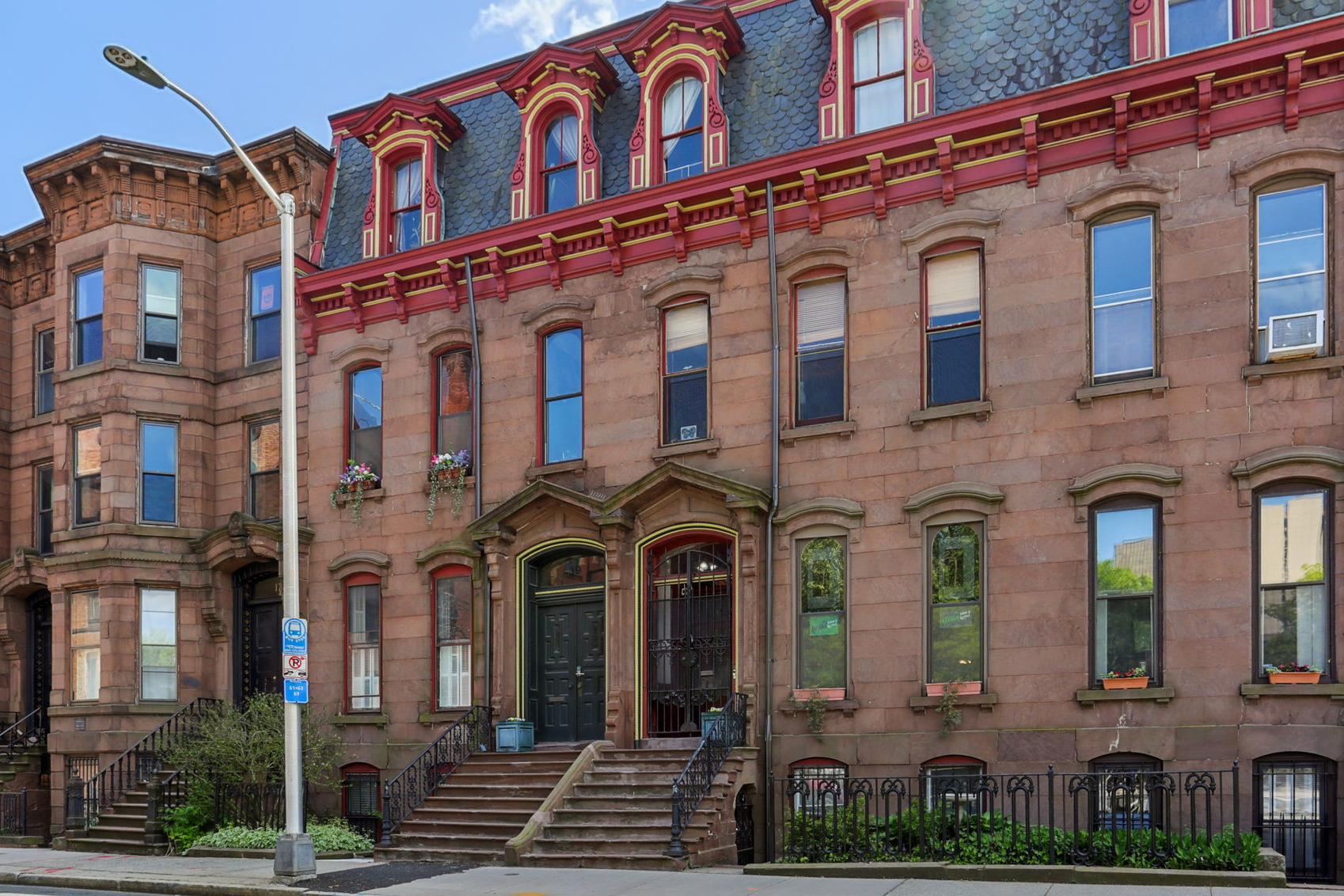
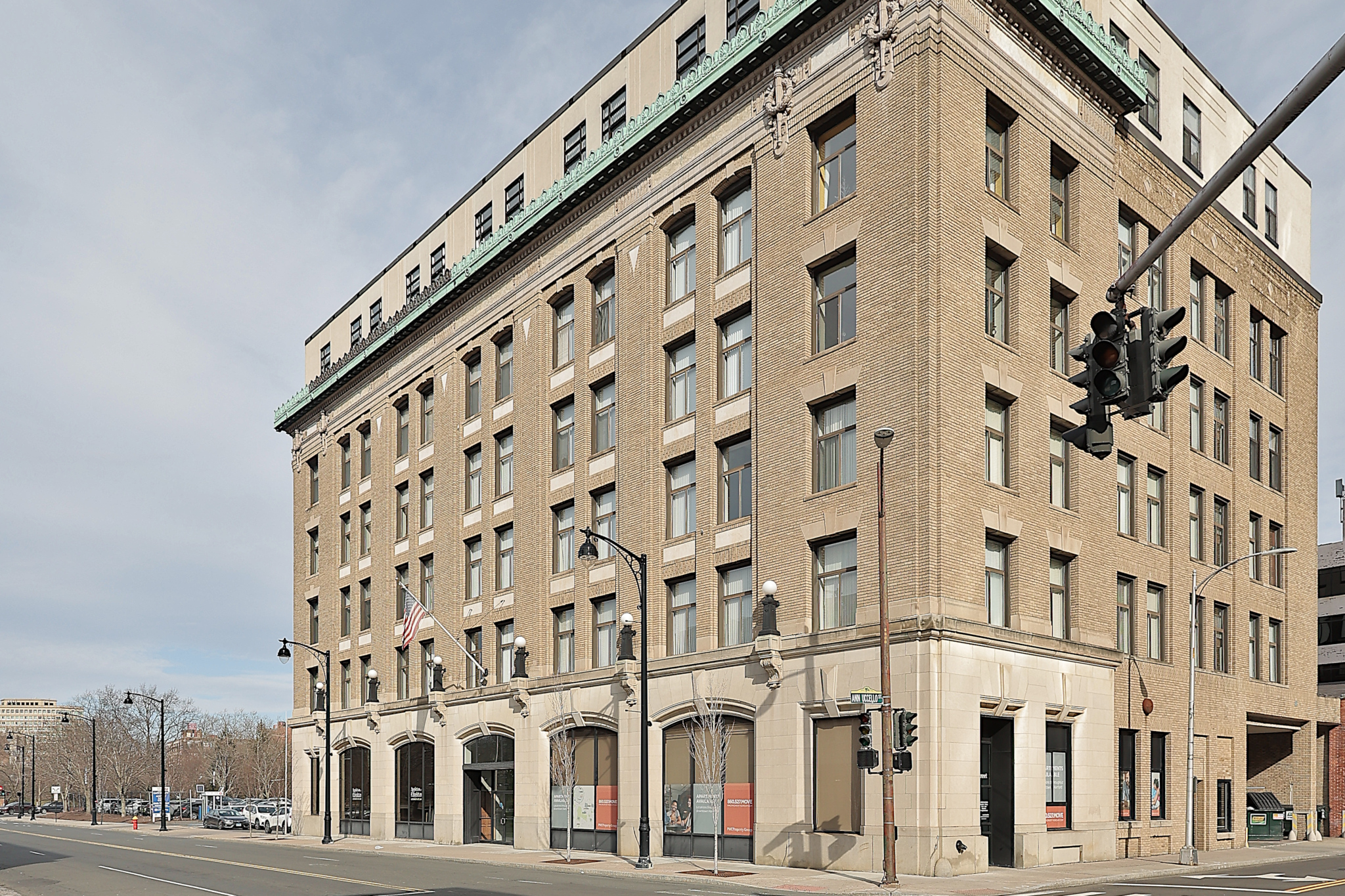
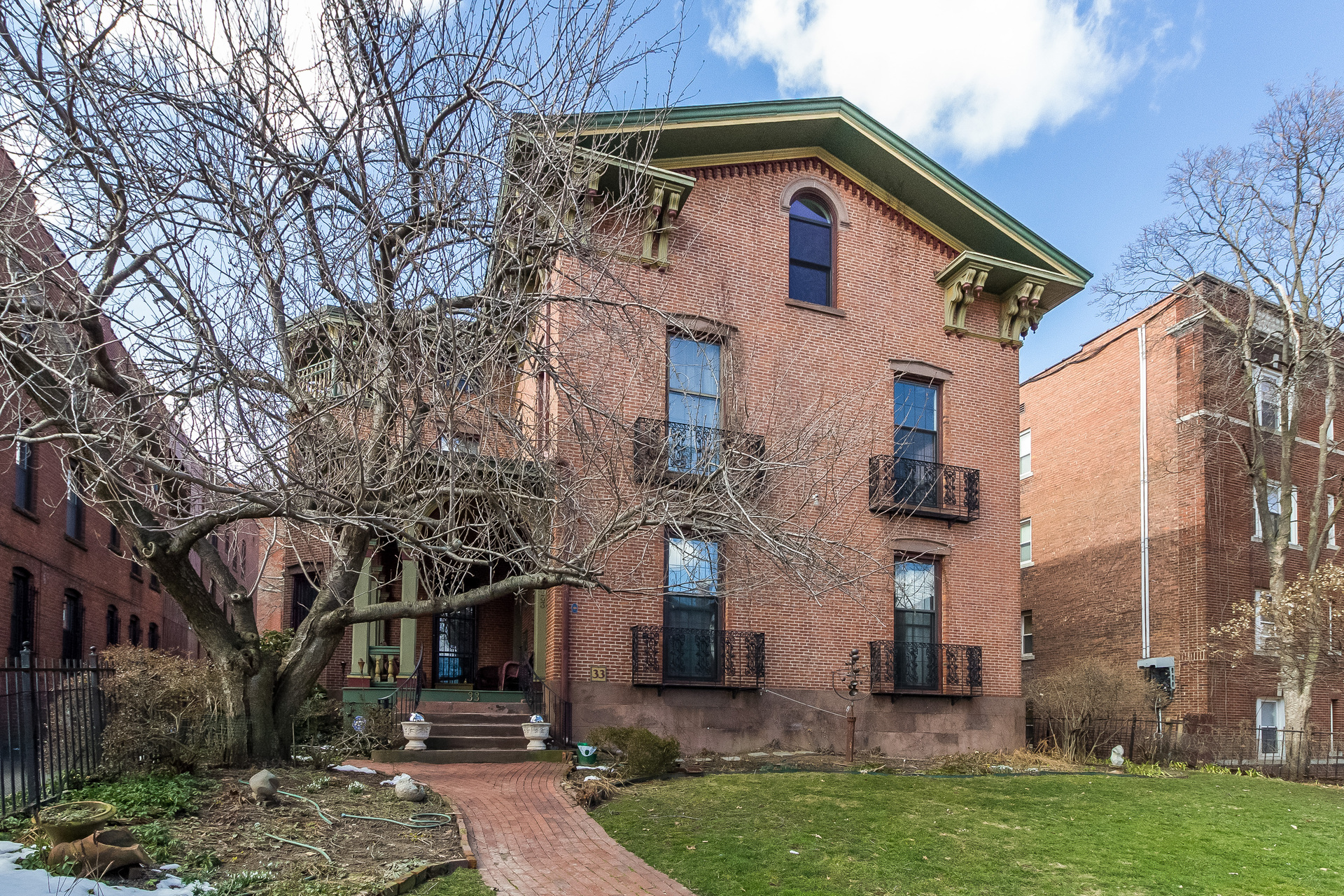
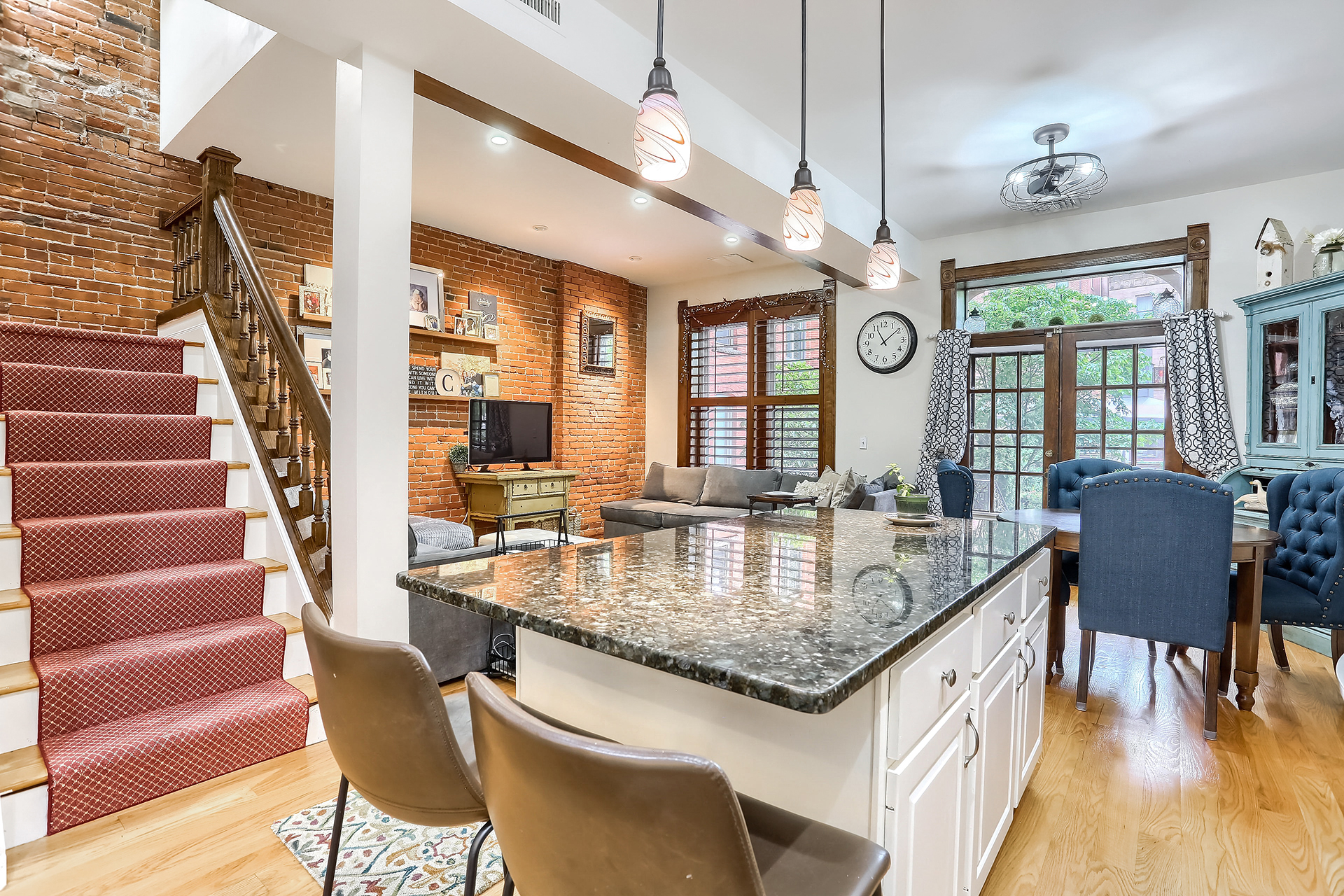
View from Riverfront Park
News and views about real estate in Greater Hartford

Archive for the 'Condos' Category

Property Taxes in the City of Hartford

One of the most difficult conversations that I have as a real estate agent is explaining the property tax system in the City of Hartford.

The Elizabeth Park Annual Garden in HartfordMost of the time the subject comes up as I’m touring around with a buyer and trying to cover various home buying subjects as we drive from one property to the next. My client will casually ask about taxes, expecting an answer along the lines of “They’re low/high compared to other towns.” In most towns I can give an answer like that, and then also talk about where that town is in the revaluation process.

When we’re touring Hartford, my answer is usually, “They’re complicated; would you like the short version or the long version?” To their credit, most buyers seem to ask for the long version. They want to know how it works, and what possibilities exist in the future. After all, they’re going to be on the hook for making the tax payments if they buy a house in the City. And as their agent, I feel it’s my responsibility to make sure my buyers have all the information they need to make an informed decision.

I’ve spent a considerable amount of time trying to understand exactly how the taxes work in Hartford.

I’ve talked to the City Assessor and various staff members to work through the details of the current system at different points of time. I’ve talked to our elected officials at both the City and State level to hear the arguments for why they have advocated for different implementations. I’ve sat in on presentations and negotiations between different constituency groups as they hash out a forward looking plan.

Despite all this effort, I still cannot neatly summarize property taxes in the City of Hartford for someone with basic municipal property tax knowledge. It’s just too complicated. I can’t even build a spreadsheet/model that will predict the coming year’s taxes based on an expected City budget. There are too many moving parts.

The best I can do is create a resource, so that those interested in learning about how property taxes work in the City of Hartford have a central place to go for information. I’ve made an effort to summarize as best I can, and I’ve also collected and sorted links to over 50 articles, presentations, and videos on the subject dating back to 2006.

The City of Hartford: Property Taxes page is a work in progress, and I definitely appreciate feedback and comments on how to make it more helpful, more accurate, and generally better.

Q2 Condo Contracts: Good News for Buyers

The Hartford County Condo market has fallen out of sync with the traditional seasonality, creating a good opportunity for buyers with lots to choose from and a more favorable pricing environment to go along with very attractive mortgage rates.

Hartford County Condo Contracts by Month - June 2011

The data shows a 13% decrease in the total number of contracts from the second quarter of 2010. However, looking more closely at the individual months, we can see that 2011 showed very steady performance – about 150 deals came together in each of the three months. The comparison to 2010 is tricky because of the federal home buyer tax credit. Last year there was a huge surge of activity in April 2010 followed by two much quieter months to round out the quarter.

Hartford County Condo Contracts by Town - June 2011More concerning is the lack of a meaningful bump in overall activity during the spring 2011 months. The 2009 market showed more traditional seasonality, which gives a sense that 2011 spent the second quarter of the year headed in the wrong direction.

Looking at the numbers for the individual towns, sorted by total Q2 2011 contracts, we can see that performance is all over the map. Some of the towns near the top of the list (towns with more condos in their housing stock) performed pretty well – Farmington and Enfield were more active than last year, while South Windsor was basically flat. Other towns with lots of condo communities struggled to match last year’s totals, showing declines of up to 40% in the number of contracts.

Inventory levels continue to increase, which is another important indicator of the direction of the market. As of this past weekend, it would take more than 10 months to work through the inventory currently on the market.

All of the data clearly points to an opportunity for buyers. The elevated inventory means that there are lots of properties to tour, and to choose from. The lack of a real increase in contract activity through the spring months shows that, for whatever reason, condos just aren’t as popular these days. Mortgage rates continue to be quite attractive, and loans are available for those with good credit and reasonable debt loads.

Renting? It may make sense to run the numbers to see if this is the right opportunity to become a homeowner.

Curious about investment properties? Being a landlord for a condo is a little bit easier than managing a multi-family or other type of property. It’s still a big commitment, but there are fewer things you’re directly responsible for as the landlord of a condo.

We would be happy to talk about any situation, and have personal experience going through both of these scenarios ourselves, in addition to helping others understand and work through them.

West Hartford Revaluation 2011, Part II

West Hartford CenterThe other day we covered the basics of the upcoming West Hartford property revaluation. As a quick reminder, the process is underway, and new “Market Values” will be available and distributed in the October time frame. Homeowners with concerns about their number can go through the “Informal Hearing” process and appeal it beyond that if needed.

Phasing In Market Values
We tried to keep things simple last time, focusing on the basic revaluation process and timeline. This required leaving out an important detail about how the 2006 revaluation was implemented. When the updated Market Values were released in the fall of 2006, residents learned that property values had increased dramatically since the previous revaluation in 1999. Rising property values are usually a good thing for owners, since it increases the equity in their home. However, this time there was a catch.

The revaluation found that residential property increased in value more than commercial property, which meant that homeowners would pay higher taxes as they collectively took over some of the tax burden from commercial property owners. In addition, residential property appreciation varied by house, which meant that homeowners with the largest gains in home value would see an even larger increase in property taxes.

West Hartford decided to use a Phase-In to more gradually transition to the new Market Values. Phase-Ins are relatively common, and increase the taxable market value of a property in stages so that owners with the biggest gains in property value aren’t hit with large tax increases all at once.

The Town allowed taxable values to increase by a maximum of 25% in the first year. Since nearly all homes had appreciated by more than 25%, the remaining change in Market Value was distributed equally to years 2 – 5 of the phase-in. By Grand List 2011, everyone would be taxed based on their 2006 Market Value.

Freezing the Phase-In
Public concern about the revaluation grew over the first two years, and focused on two main points. First, that the October 2006 revaluation date may have been the peak of the market. Some argued that the values were unfair because homes couldn’t be sold at those prices less than two years after they were set. The second concern was that homeowners were being taxed on unrealized gains. Owners didn’t have any extra money in their pockets from their home’s appreciation, so how could they afford to pay their increased taxes without selling their home? The argument typically used long-time residents who were on a fixed income as examples. The Town Council voted to freeze the phase-in after the second year, locking in the Grand List 2007 values.

Many of the effects of freezing the phase-in were correctly identified in real time at public meetings. Residential property had increased in value more than commercial property, so freezing the phase-in shifted more tax burden to businesses, which were struggling with a weakened economy. It also shifted more of the burden to motor vehicle owners. Finally, homes with less than average appreciation ended up paying more taxes than they otherwise would have, while homes with more than average appreciation paid less than they otherwise would have.

West Hartford Town Hall

In the two years since the freeze was implemented, we’ve learned even more about the effects. One of the most interesting is that the revaluation was not done at the peak of the market. Average prices continued to rise through 2007 even though the number of transactions was already falling. Although we didn’t publish the chart, the trend was similar in West Hartford. Additionally, the decline in prices over the subsequent down years has not been nearly as steep in West Hartford as it has in other areas of the region or the country. The value of many homes continues to be fairly close to the numbers identified in the 2006 revaluation.

As a specific example, consider a very typical 3 bedroom, 1.5 bath home in West Hartford Center. The 1999 revaluation set the Market Value at $148,600. Revaluation 2006 determined that it had appreciated to $280,286. The property had sold a couple years before for about that price, so in this case the Assessor did pretty well.

Revaluation 2011 will likely show that its Market Value has not changed dramatically. This particular home was recently listed for sale again, at right around $300,000, and went under contract very quickly, as most do in this price range. However, because the phase-in was frozen, the home is on the tax roles as being worth $209,384.

Analysis of Grand List data from the Assessor’s office shows that had the Phase-In been completed as planned, the mill rate for the coming year would be about 32.65 rather than 39.44. We calculated this number by removing the Phase-In Exemptions from the assessed values and then allowing the mill rate to decrease until the property tax revenue equaled what the Town expects to raise in the coming year. Our estimated mill rate may not be exactly right, but it’s close.

Planning for the Fall
Owners are in a similar position as 2006 when looking towards the 2011 revaluation. Within the residential side of the Grand List there are large variations in how home prices differ from the frozen phase-in values. Changes to the commercial side of the Grand List, which makes up 16.4% of property values in town, are also uncertain. It is difficult to project how the tax burden may shift. It seems prudent to wait until the fall to understand exactly where we stand before getting too concerned about different possibilities.

In the meantime, residents need to understand a few key points. The revaluation will begin to go public in the fall, and individual home owners will have an opportunity to challenge their Market Values. There will hopefully be a public discussion about how to transition to the new Market Values. Finally, if the Phase-In had been completed (rather than being frozen), the order-of-magnitude tax impact on owners would have been in the +5% to +10% range, though it would have varied considerably based on the assessment of individual homes.

17 Harwich Lane, West Hartford

Welcome to a bright, upgraded, end unit at the Tumblebrook Estates community.

17 Harwich Lane, West Hartford

The first floor features a combination living room and dining room that opens to the kitchen. Hardwood floors, crown molding, fireplace, and French doors add to the character of the space. The oversized, eat-in kitchen has more than enough room for cooking and storage, with a breakfast area at the far end. A traditional foyer and updated powder room complete the level.

Upstairs, the spacious master suite includes a bay window, fireplace, walk-in closet, and full bath with dual vanity, shower stall, and whirlpool tub. The two additional bedrooms both have good closet space. The second level also includes a hall bathroom and laundry area.

The fully finished lower level of the townhouse contains a large media room with built-in surround sound and a second smaller room perfect for play space or a popcorn popper.

The unit has an attached 2 car garage, and the complex is built around a large center green that is lightly treed and makes for a nice public space.

17 Harwich Lane is offered at $324,900. If you’d like to see this home, please have your agent arrange a showing, or call me at 860-655-2922 to schedule a visit. More details and a photo tour are available.

February Condo Contract Musings

Through the first two months of the year, buyer interest in condos has been relatively mild. The February data on contracts in Hartford County show that 26% fewer deals came together this February versus last. Overall, there is 8.6 months of supply, which by definition makes it a buyer’s market (6 months of supply is the threshold).

Despite the relatively high inventory levels, the supply is not always distributed in the same manner as the demand. Some complexes have a lot of units for sale with very little apparent interest, while other communities that are perennial favorites with buyers have maybe one or two available.

The most curious data point in the whole table is the number of contracts in South Windsor. There are a lot of condo communities in town, and South Windsor is usually one of the leaders in terms of total annual deals. Last year there were 106, while in the year before there were 110. This year has been a completely different story. There were only 4 in January, and just 2 in February.

Their inventory number is actually quite reasonable, at 6.2 months – a much more balanced market than some of the towns that are strongly favoring buyers. Scanning through the active listings, most of the big South Windsor communities do have a couple of units available, but not as many as in the past year. As a specific example, one complex had 14 closings since 1/1/2010 and currently has 2 active listings and 1 under contract. Is the huge drop in activity a supply problem, a demand problem, or a mismatch of the two?

It’s not yet clear what is going to happen in the condo markets this year. As the chart below shows, the number of transactions has been considerably lower in the past few years. The first two months of this year point to an even slower 2011 than 2010. Are the buyers simply waiting until the weather improves before they get serious about their search? More listings will appear as April approaches, but will owners look to sell their units at the same pace as they have in previous years?

« Previous Entries